Tracking
How to Track Hormonal Symptoms and Actually See Patterns
From "I feel off lately" to a pattern you can point to.
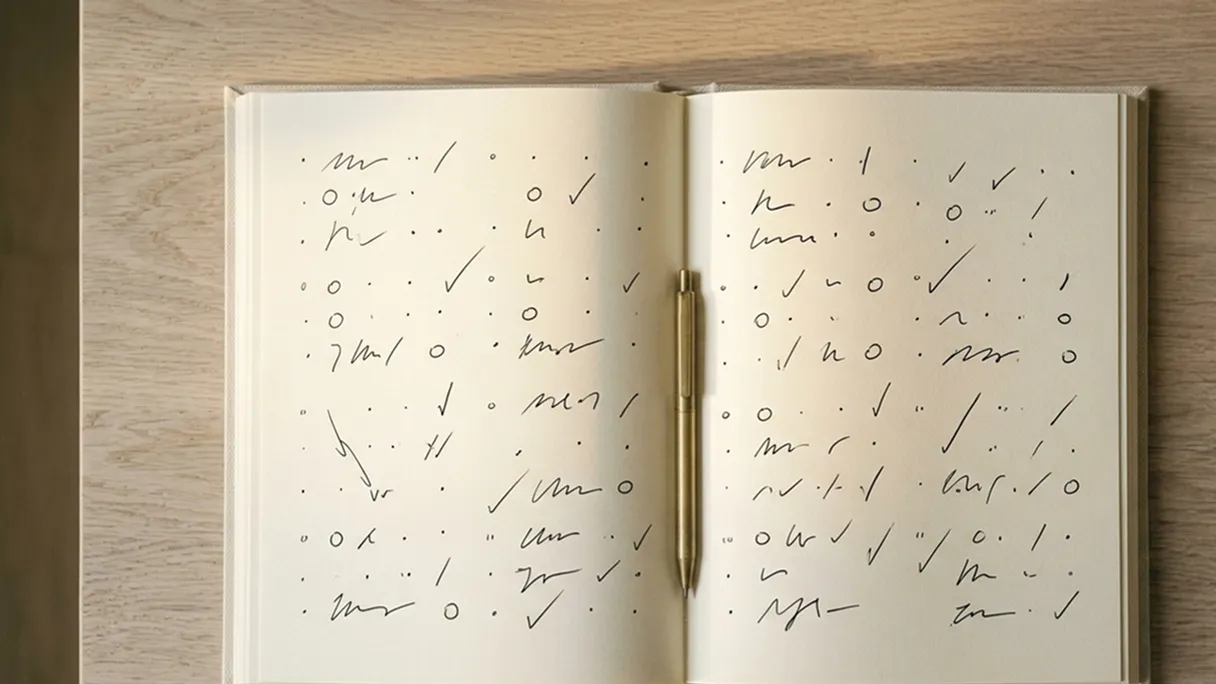
“I just feel off lately.” If you have said that to a doctor, a partner, or yourself, you already know how unsatisfying it is. Not because it is untrue, but because it is unanswerable. Off how? Since when? On which days?
Tracking is how “off lately” becomes something you can point to. It is much easier than most people make it.
What to track
The magic is not in any single measure. It is in the cross-references. Aim for a small, consistent set:
- Cycle: where you are, and any bleeding or spotting
- Energy: a simple low-to-high rating
- Mood: a rating plus a word or two if something stands out
- Sleep: hours and quality, even roughly
- Symptoms: whatever visits you, from headaches and bloating to brain fog and night sweats
- Extras when relevant: food notes, supplements, unusual stress
Each item takes seconds. The value appears when you line them up: sleep against cycle phase, mood against sleep, symptoms against all three.
How long until you see something
A full cycle of data reads like a story. Two cycles will usually show you which patterns are really yours and which were one-off noise, and it is the window clinicians work in too: the RCOG asks you to record your symptoms over two cycles before diagnosing PMS.
Common early discoveries:
- Sleep reliably breaks in a particular phase, most often the late luteal days
- The “random” low-mood days are not random at all; they cluster, often in the days before a period
- Energy has a strong window every month that you could be scheduling around
- A symptom you assumed was constant actually visits on a timetable
There is a particular relief in this moment that is hard to overstate. The pattern was always there. You just could not see it from inside a single day.
The rules that keep you tracking
Most tracking attempts die of perfectionism, not laziness. The habits that survive follow different rules:
- Missed days are fine. Patterns emerge from imperfect data. A log with holes in it still tells the truth; an abandoned log tells you nothing.
- Small and daily beats detailed and occasional. Thirty seconds a day outperforms a beautiful weekly essay.
- Track feelings, not just facts. “Slept 7 hours” is data; “woke at 3am and could not switch my brain off” is insight.
- No streaks, no guilt. You are not performing for the log. It works for you, not the other way around.
Bringing your data to the doctor
This is where tracking pays for itself. A vague “my sleep has been bad and my moods are all over the place” invites a shrug or a generic suggestion. A tracked record that shows your sleep breaking in the five days before your period, across three consecutive cycles, invites an actual clinical conversation.
This matters enormously in the perimenopausal years, when single blood tests routinely come back normal while symptoms are very real, which is why NICE tells clinicians to identify perimenopause without laboratory tests. Your longitudinal record is evidence of the fluctuation a snapshot cannot capture. Doctors can work with patterns; nobody can work with vibes.
Paper, notes app, or planner
Any medium beats none. A paper journal works. A notes app works. What a purpose-built planner adds is the cross-referencing: automatically lining your logs up against your cycle phase so patterns surface instead of hiding in prose, while keeping something this personal private and off the data market.
Whatever you choose, the principle is the same. Your body has been trying to show you its patterns for years. Tracking is simply agreeing to watch.
This article is for educational purposes and is not medical advice. If your symptoms are severe or worsening, do not wait for more data. See a healthcare provider.
Keep reading