Symptoms
Hot Flashes and Night Sweats in Perimenopause: What Helps
The wave that starts in the chest and climbs, and what is really behind it.
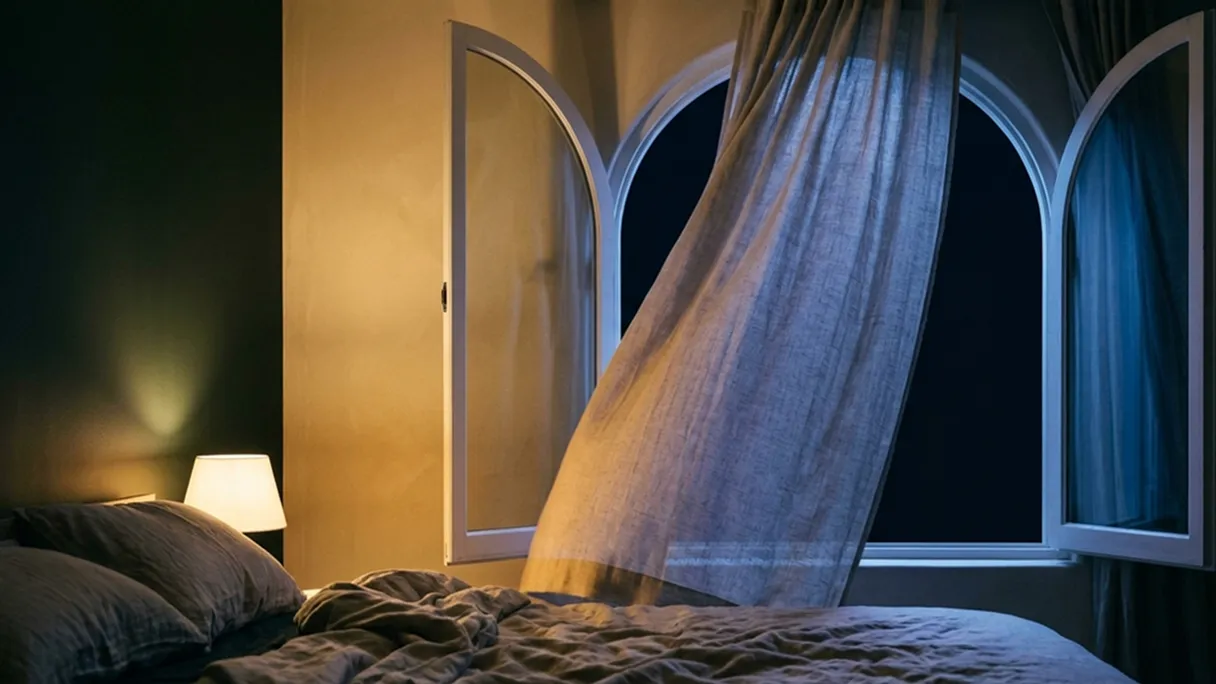
It starts in the chest or the back of the neck and climbs, a few seconds of warning if you are lucky, then heat rising into your face while you try to keep your expression normal. Or it comes at three in the morning and you wake soaked, the sheet cold and damp under you, expected to be a functioning adult in five hours.
Hot flashes and night sweats in perimenopause are the same event at different hours. In a clinic they are called vasomotor symptoms, VMS for short, hot flushes in British English, and they reach around three in four women. As estrogen fluctuates and falls, the narrow band of temperature your brain quietly defends appears to get narrower, so a small rise in body heat you would never once have noticed now triggers a full cooling response. A flash usually runs about 1 to 5 minutes and is often followed by chills, which is the part nobody warns you about. They can start years before your periods change, they last a median of around seven years, and treatments that work exist.
What this article cannot do is tell you what you have. Other conditions look almost exactly like this, which is why what else it could be comes before the treatment section here, not after it.
Why does perimenopause cause hot flashes and night sweats?
Your body defends its core temperature inside a comfortable band, the thermoneutral zone, governed by the hypothalamus. Inside it you neither sweat nor shiver. When estrogen swings and declines, that band narrows, and a rise in heat that once meant nothing now reads as an emergency. Your body opens the blood vessels near the skin, which is the flush. It sweats, which is the drenching. Then, having overshot, it leaves you cold, which is the shiver. A hot flash is not your body failing. It is a working emergency cooling system wired to a thermostat that now trips far too easily.
They can start long before your periods change
One of the cruelest things women are told is that flashes come at the end, once periods stop. For many they arrive years earlier, while cycles are still regular, and they cluster, often worse in the days before a period. Early Signs of Perimenopause covers what else shows up in the same window.
This is where the normal labs come from. Over 45, with typical symptoms, guidance says an FSH or estradiol panel usually adds nothing: it measures one day of a system that now behaves like weather, and diagnosis is made on symptoms and pattern. But that is true of hormone panels and nothing else. A thyroid test and a full blood count are exactly the right instrument for what they measure, and they are worth having.
One exception matters enormously. Under 45, and especially under 40, the rules invert. Hormone testing is part of the picture then, because premature ovarian insufficiency needs diagnosing rather than waiting out, and missing it carries lifelong consequences for your bones and your heart. If that is you, ask, and keep asking. Perimenopause, Explained sets out the wider timeline, and the perimenopause self assessment is eleven questions, scored in your browser, if you want to see how your symptoms cluster.
How long do hot flashes and night sweats last?
You deserve the honest answer rather than the comforting one. SWAN, the long study that followed thousands of women through the transition, found a median duration of about 7.4 years, and more than eleven years for women whose flashes begin early, before their cycles change. A minority still get them, milder, for many years after their last period. That is hard to read at midnight. But “it will pass soon” is how women endure years of broken sleep without ever asking for treatment.
What else it could be, and when to get help
Perimenopause is common. It is not the only thing that makes a woman sweat at night, and assuming is how women get hurt.
An overactive thyroid can look almost identical: heat, sweating, palpitations, weight change. Obstructive sleep apnea is the one most often missed here, and it becomes more common across the menopause transition. The clues are snoring, gasping or choking awake, pauses in your breathing that a bed partner notices before you do, morning headache, and daytime sleepiness out of proportion to how often you actually woke. That needs assessing rather than enduring, because untreated it raises the risk of stroke and heart attack, and because it is treatable. Anxiety and panic produce heat, sweat, and a racing heart. Anemia does not really cause sweats, but it does cause the fatigue, breathlessness, and palpitations folded into this picture. If you take insulin or a sulfonylurea, a three in the morning sweat may be low blood sugar rather than a hormone. Infections, some medications, depression, and, rarely, certain cancers including lymphoma belong on the list too. If your clinician does not raise these, raise them yourself.
Some things should not wait at all.
- Call emergency services now. Chest pain, pressure or tightness, pain spreading into the jaw or arm, sudden breathlessness, fainting, or a sudden severe headache. Do not wait, and do not drive yourself. Heart attacks present differently in women, sweating among the symptoms. This is not the moment to assume it is a hot flash.
- Be seen urgently, within days. Any bleeding at all after twelve months with no period. Bleeding between periods or after sex. Drenching night sweats with unexplained weight loss, fever, or swollen glands. A new lump anywhere.
- Book an appointment. Sweats that arrived suddenly and bear no relationship to your cycle. Snoring with gasping or choking. Symptoms wrecking your sleep, your work, or your mood, which is reason enough on its own.
What tends to help
Be wary of confident advice here, this article’s included. Trigger avoidance and cooling are widely recommended, and the trial evidence behind them is thin, which is not the same as saying they do nothing for you.
- Learn your own triggers. Alcohol, caffeine, hot drinks, spicy food, warm rooms, and stress are the usual suspects, and one may be yours while the rest are irrelevant.
- Dress and sleep for fast cooling. Removable layers, natural fibers, a cool bedroom, a fan, a lighter blanket if you share a bed.
- Treat the sleep loss as its own problem, once apnea has been ruled out. Sleep, Stress, and Your Hormones is worth reading alongside this one, because night sweats do damage twice, once by waking you and once through what lost sleep does to the next day.
Smoking tends to track with worse flashes, which is a fact about the evidence, not a verdict on you. Cognitive behavioral therapy and clinical hypnosis have real evidence, not for stopping flashes but for reducing how much they take from you. Supplements are heavily marketed in this gap, black cohosh, evening primrose oil, soy isoflavones, red clover, and supplements and herbal remedies are not recommended. Ineffective is not the same as harmless: black cohosh has been linked to rare liver injury, and supplements can interact with medicines you already take.
Treatment exists, and here is what it is
Menopausal hormone therapy, still widely called HRT, is the most effective treatment there is for hot flashes and night sweats. That is the Menopause Society’s position, and NICE tells clinicians to offer it for vasomotor symptoms. You deserve to have heard it plainly.
It is not a recommendation, because that decision cannot be made in an article. Estrogen is usually avoided, or needs specialist input, if you have or have had breast cancer or another estrogen-dependent cancer, unexplained vaginal bleeding that has not been investigated, a previous clot in the leg or lung or a clotting disorder, a previous stroke or heart attack, or active liver disease. Combined estrogen and progestogen carries a small increase in breast cancer risk that rises the longer it is used. Oral estrogen raises clot risk, while estrogen through the skin, patch or gel or spray, does not appear to at standard doses, which is exactly why the route matters. And if you have a uterus, estrogen has to be given with a progestogen to protect the womb lining. None of that is a reason to walk away from the conversation. It is the conversation, and it belongs with a clinician who knows menopause care.
If HRT does not suit you, or is not what you want, non-hormonal prescriptions with real evidence exist, and it helps to be able to name them: low dose venlafaxine, escitalopram or paroxetine, gabapentin, oxybutynin, and the newer drugs acting on the hypothalamic cells that set the flush off, of which fezolinetant is the first. That last class carries a warning about rare but serious liver injury, requires liver blood tests before and during treatment, and any yellowing of the skin or eyes, dark urine, right sided abdominal pain, or unusual tiredness must be reported at once. If you take tamoxifen, say so out loud in that appointment, because guidance advises avoiding paroxetine and fluoxetine where an alternative exists.
Compounded “bioidentical” hormones, and hormones bought online, carry safety concerns the major bodies have set out, they are not safer for being called natural, and estrogen without protection for the womb lining is a real risk to you, not a bureaucratic one. What is not true is that there is nothing.
Where to start tomorrow
Write it down. Not as a chore, as evidence. For four to six weeks, record each flash and each night sweat against the day of your cycle, with a line about what you ate, what you drank, and how you slept. What emerges has a shape: they cluster in these days, they follow that glass of wine, they wake you at that hour. Tracking your symptoms this way turns “I feel off” into a page you can put in front of a healthcare provider, and it is much harder to be dismissed when you arrive with six weeks of it.
You are not imagining this. You are not being dramatic. And you do not simply have to get through it.
This article is for educational purposes and is not medical advice. Call emergency services if heat and sweating come with chest pain or tightness, pain spreading to the jaw or arm, breathlessness, or fainting, seek urgent care for any bleeding after twelve months without a period or for night sweats with weight loss, fever, or lumps, and speak to a healthcare provider about treatment if flashes are affecting your sleep or your life.
Keep reading